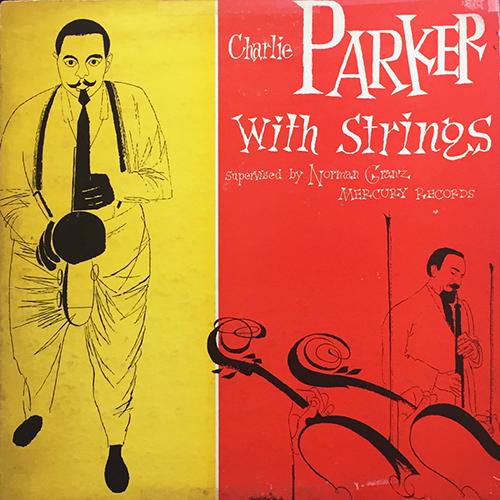
Charlie Parker with Strings is one of the most iconic jazz records ever released. The 1950 release saw famed alto saxophonist Charlie Parker join forces with lavish orchestral arrangements for a gorgeous collision of bebop improvisations and the American popular songbook. The recordings are still a part of Parker’s legacy.
Song and Lyric Credits: Charlie Parker With Strings
The first Charlie Parker with Strings recordings had some of the finest standards of the day. Song and credited writer credits are:
“Just Friends,” Sam M. Lewis and John Klenner
“Everything Happens to Me”—Tom Adair and Matt Dennis “April in Paris”—Vernon Duke and E.Y. “Yip” Harburg “Summertime”—George Gershwin, Ira Gershwin, and DuBose Heyward “I Didn’t Know What Time It Was”—Richard Rodgers and Lorenz Hart “If I Should Lose You”—Ralph Rainger and Leo Robin
The sessions of July 1950 added “Dancing in the Dark” (Arthur Schwartz and Howard Dietz); “Out of Nowhere” (Johnny Green and Edward Heyman); “Laura” (David Raksin and Johnny Mercer); “East of the Sun (West of the Moon)” (Brooks Bowman); “They Can’t Take That Away from Me” (George and Ira Gershwin); “Easy to Love” (Cole Porter); “I’m in the Mood for Love” (Jimmy McHugh and Dorothy Fields); and “I’ll Remember April” (Gene de Paul, Patricia Johnston, and Don Raye).
More Charlie Parker with Strings Recordings
Later editions and the associated recordings added “Temptation” by Nacio Herb Brown and Arthur Freed, “Autumn in New York” by Vernon Duke, “Lover” by Richard Rodgers and Lorenz Hart, and “Stella by Starlight” by Victor Young and Ned Washington. Bonus material includes “What Is This Thing Called Love?” by Cole Porter, “Repetition” by Neal Hefti, and “Rocker” by Gerry Mulligan.
What is so wonderful about Charlie Parker with Strings is the juxtaposition of Parker’s creative alto sax playing with the smooth, graceful orchestral background. These recordings demonstrate that bebop could work nicely with complex arrangements and timeless American songs.
Posted inARTICLES
Charlie Parker with Strings: Songs, Songwriters, and the Legendary Jazz Album
Posted by
 No Comments
No Comments
Post navigation
Previous Post
 The History of Beale Street, Memphis