Beale Street in Memphis is so much more than a famous strip with neon lights, eateries, and live music. For years, Beale Street has been the birthplace of Memphis blues music, African American culture, and the roots of some of America’s most important musical traditions. Today, the street is known around the world as the Home of the Blues.
The Early History of Beale Street
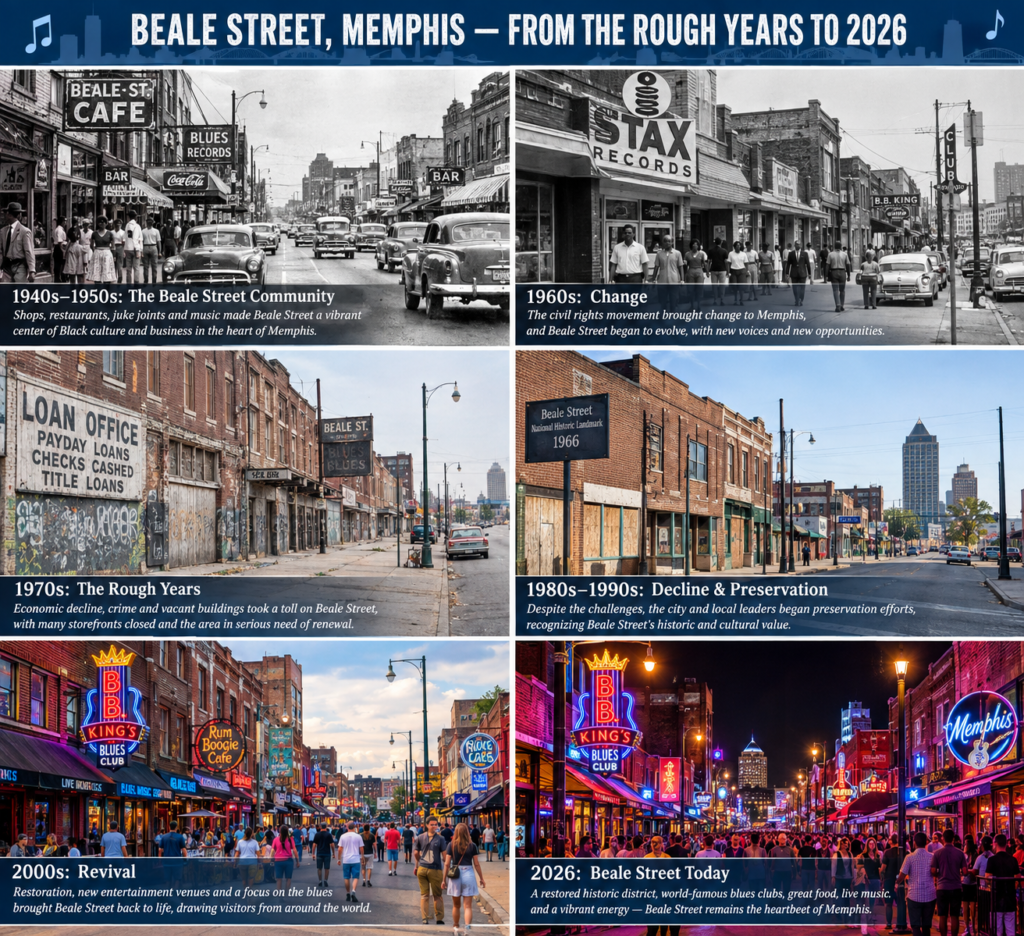
Beale Street’s history extends back to the 1800s. After the Civil War, Beale Street and the surrounding area became a major focus for African-American business, entertainment, and community life in Memphis. Beale Street became a major economic and cultural destination for Black-owned shops, churches, theaters, restaurants, and clubs.
One of the most important figures in early Beale Street history was Robert R. Church Sr., a successful businessman who founded Church Park in 1899. The park became a landmark for the city’s African American community and helped make Beale Street a center for music and entertainment.
Memphis Blues W. C. Handy
W.C. Handy is impossible to overlook in the history of the Memphis blues. Handy, the “Father of the Blues,” worked in Memphis in the early 20th century and became synonymous with Beale Street.
Handy’s “The Memphis Blues” helped carry the sound of Memphis well beyond the borders of Tennessee. He later penned Beale Street Blues, which indelibly linked the renowned Memphis street to the blues in American popular culture.
Handy and his music are linked to the Beale Street Historic District, where the blues was “born” and “homes,” according to the Library of Congress. The district was designated a National Historic Landmark in 1966.
Famous Memphis Blues Musicians
Memphis is the home of some of the finest names in blues music, having performed on or around Beale Street. Among these are B.B. King, Memphis Minnie, Albert King, Furry Lewis, Bobby “Blue” Bland, Muddy Waters, and Howlin’ Wolf.
Legendary B.B. King became synonymous with Beale Street. He embraced the nickname “Beale Street Blues Boy” as B.B. King and brought his Memphis blues sound to audiences around the world.
Other prominent Memphis musicians such as Rufus Thomas, Willie Nix, Sleepy John Estes, and the Memphis Jug Band were part of a unique Memphis blues sound that was a mixture of guitars, harmonicas, vocals, rhythm, and the legendary jug-band tradition.
The Rise & Fall of Beale Street
Beale Street in Memphis has faced its challenges over the years. In the 1960s and 1970s urban redevelopment, changes in business patterns and the demise of downtown Memphis impacted the historic neighborhood. During this period, the city destroyed hundreds of structures and displaced numerous residents.
Beale Street was extensively redeveloped in the 1980s. Old buildings were refurbished, and new restaurants, clubs, and music venues opened. Today, Beale Street in Memphis draws travelers from all over the world to experience the live music and culture of the city.
The Musical Legacy of Beale Street
In the end, the tale of the Beale Street blues is the story of Memphis. Beale Street helped build the singular musical identity of Memphis, from W.C. Handy and Memphis Minnie to B.B. King and generations of local performers.
Today, walk along Beale Street and you can still hear the blues, live, from the clubs. Beale Street is far more than a historic site. It continues to be one of the most identifiable emblems of Memphis blues, American music, and the Bluff City’s musical history.
Posted inARTICLES
The History of Beale Street, Memphis
Posted by
 No Comments
No Comments